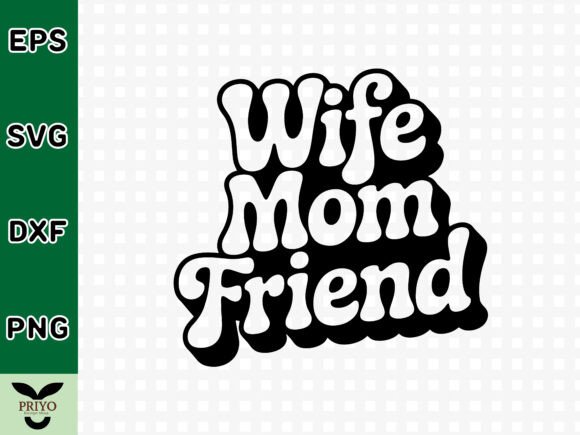
Wife Mom Friend SVG
A Designer’s First Look: Warm, Simple, and Immediately Recognizable
Opening Wife Mom Friend SVG feels like flipping through a well-loved notebook of handwritten affirmations—soft but confident, heartfelt without being cutesy. It’s not ornate or script-heavy; it leans into clean, balanced lettering with gentle spacing and subtle weight variation. The phrase flows horizontally as one cohesive unit—not stacked, not broken into banners or badges—so it reads instantly at a glance. That matters more than you’d think when stitching onto a curved tote handle or the front pocket of a baby onesie. As a machine embroidery design, its visual personality lands somewhere between cozy boutique charm and modern minimalism: warm enough for a mother’s day tea towel, crisp enough for an Etsy seller’s branded sweatshirt line.
Where It Shines: Real Projects That Feel Thoughtful, Not Trendy
I recently prepped a batch of embroidered canvas tote bags for a local gift shop—each one personalized with a short, meaningful phrase. Wife Mom Friend SVG was my top pick for the “supportive women” collection. Why? Because it stitched cleanly on medium-weight canvas with standard tear-away stabilizer, held legibility even at 3.75" wide (a sweet spot for totes), and looked equally intentional on natural linen and heather grey. I also tested it on a lightweight cotton apron—no puckering, no thread breaks—and found the rhythm of the three words created natural visual breathing room. That spacing translates beautifully into satin stitch outlines or soft fill-stitch lettering, especially when paired with a single accent color like dusty rose or charcoal grey.
It’s also quietly effective for baby embroidery: think burp cloths, onesies, or nursery wall hangings. On a 100% cotton receiving blanket, the design didn’t overwhelm the fabric—it complemented it. Same goes for holiday embroidery: stitched in gold thread on a navy knit pillow cover, it read as elegant and personal, not generic. For Etsy sellers and small shop owners, this kind of versatility is gold—it means one digital embroidery file can support multiple product lines without needing redesigns or resizing gymnastics.
Where to Pause and Plan Ahead
This isn’t a “set and forget” embroidery file. Its simplicity is a strength—but also a quiet responsibility. Because there are no flourishes or borders to mask inconsistencies, every stitch detail matters. On stretchy fabric like jersey knits or thin ribbed t-shirts, I recommend testing with light cut-away stabilizer underneath *and* topping with a light tear-away film. Without that dual-layer support, the center “Mom” tends to shift slightly under tension—a tiny drift, but one your customers will notice on a $48 custom sweatshirt.
Small hoop sizes (under 4") require extra attention. At 3", the letterforms stay legible, but fine serifs or tight inner curves (like the counter of the “e” in “Friend”) can compress or blur depending on your machine’s stitch density settings. If you’re planning embroidered patches or cap fronts, confirm whether your digitizer adjusted kerning for curved surfaces—or test on a mock cap first. And on dark fabric? Don’t assume black thread will pop. Try a mid-tone grey or navy thread instead: it lifts the warmth of the phrase without glare.
Design Notes Every Embroidery Professional Should Check
- Test on scrap fabric first—especially if using textured weaves like burlap or terry cloth.
- Review stitch density: This design doesn’t look dense, but overlapping fills in certain fonts can trap moisture or stiffen lightweight fabrics.
- Confirm hoop size compatibility before batching production—some versions may be optimized for 5x7”, others for 4x4”.
- Inspect small details at actual stitch-out size: check inner corners, junction points, and thread jumps.
- Mock it up in black and white before finalizing thread colors—contrast clarity often reveals hidden legibility issues.
- Compare light vs. dark fabric backgrounds using real swatches, not just screen previews.
- Use proper stabilizer matched to both fabric *and* end use—e.g., washable items need wash-safe backing.
- Verify licensing before selling finished products or bundling Wife Mom Friend SVG into craft business kits or digital product previews.
How It Shapes Perception—Beyond Just Stitching
When a customer sees Wife Mom Friend SVG on a handmade product, they don’t just read words—they feel intention. It signals care, not convenience. That matters for brand consistency: if your shop sells thoughtful, gender-inclusive gifts for caregivers, this design reinforces your voice. But it also demands authenticity—if your branding leans edgy or minimalist, forcing this warm, relational phrase onto a stark monochrome mug might dilute your message.
For personalized gifts, it builds instant emotional resonance. A new mom receiving a pillow cover stitched with Wife Mom Friend SVG doesn’t see decoration—she sees recognition. That elevates perceived value, increases giftability, and encourages repeat buyers. And for commercial embroidery projects—say, bulk orders for a PTA fundraiser or boutique collaboration—the design’s clarity and adaptability mean fewer reworks, faster turnaround, and smoother client approvals.
Final Thought: A Quiet Workhorse, Not a Flashy Gimmick
Wife Mom Friend SVG won’t stop traffic with glitter or animation—but it earns trust, stitch by careful stitch. It belongs in your core library of Graphics for Crafts not because it’s trendy, but because it solves real problems: how to say something tender without cliché, how to embroider meaning without overcrowding, and how to offer a handmade product that feels both personal and polished. Whether you're an Etsy seller building seasonal collections, a small shop owner curating local merchandise, or a designer choosing assets for client apparel lines—this is the kind of embroidery file that works harder than it looks. Just remember: respect its simplicity. Test it. Tune it. Then let it speak plainly, clearly, and warmly—exactly as intended.