Nurses: We Can’t Fix Stupid, But We Can Sedate It
First Impression: Sharp, Witty, and Immediately Recognizable
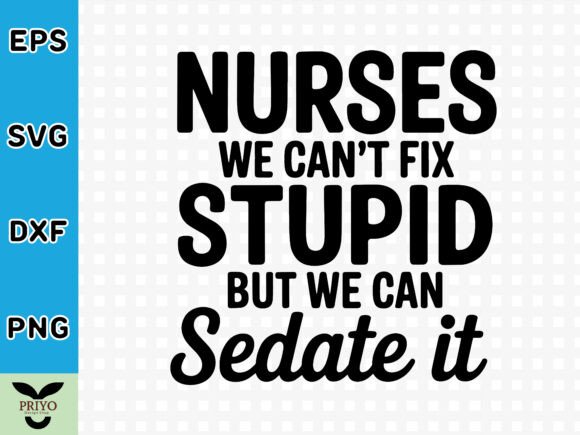
When I opened Nurses We Cant Fix Stupid but We Can Sed, my first thought wasn’t about stitch count or file format—it was about voice. This isn’t a shy, decorative script or a soft botanical motif. It’s bold, dry-humored, and unmistakably nurse-coded: equal parts exhaustion, expertise, and dark levity. The layout feels intentionally compact—no wasted space, no decorative flourishes that would muddy readability in thread. That tells me it was designed with real-world embroidery in mind, not just screen display.
A Real-World Test: Embroidering It on a Heavy Cotton Tote Bag
Last week, I used Nurses We Cant Fix Stupid but We Can Sed for a custom order: a 14”x16” natural canvas tote for a NICU nurse’s retirement gift. I chose a medium-density satin stitch for the lettering (not too dense to avoid stiffness, not too light to lose definition), paired with a lightweight cutaway stabilizer. On that fabric? It held up beautifully—clean edges, consistent spacing, zero thread nesting. Customers notice this kind of clarity instantly. It doesn’t look “designed for print” and then awkwardly translated to stitch; it *feels* like it was born for embroidery.
Where It Shines—and Where It Needs Careful Handling
Nurses We Cant Fix Stupid but We Can Sed works exceptionally well on structured, stable fabrics: sweatshirt fleece, twill aprons, denim jackets, and cotton tea towels. Its short line length and strong letterforms make it ideal for caps and curved surfaces—no distortion when hooped correctly. As a machine embroidery design, it avoids thin serifs or delicate ligatures that vanish at small scales, so it scales cleanly down to a 3.5” width for baby onesies or embroidered patches.
But be thoughtful: on stretchy knits (like jersey tees), you’ll need excellent stabilizer support—especially under the “Sed” tail, which carries visual weight. On dark fabric, test contrast early: light thread (ecru or pale grey) reads clearly, but neon or pastel tones risk fading into the background. And skip it entirely on ultra-thin fabrics like chiffon or lightweight rayon—stitch density can cause puckering or show-through.
What It Adds to Your Finished Product
This isn’t just text stitched onto cloth—it’s tone, identity, and shared understanding. When used on a boutique-branded pillow cover or an Etsy-sold embroidered sweatshirt, Nurses We Cant Fix Stupid but We Can Sed elevates perceived value because it signals authenticity. Buyers don’t just see humor—they recognize insider credibility. That builds trust faster than generic floral monograms ever could.
For craft business owners, it’s a reliable anchor piece: easy to photograph, versatile across product types (tote bag design, embroidered patch, holiday embroidery for Nurse Appreciation Week), and highly shareable on social media. Just keep brand consistency in mind—if your shop leans minimalist or clinical, this design’s sass may need balancing with cleaner supporting graphics.
Practical Designer Notes You’ll Actually Use
- Always test on scrap fabric first—especially if pairing with textured materials like terry cloth or looped kitchen towels.
- Review stitch density before running full production. Overly dense fills can overwhelm lightweight cottons; overly sparse runs risk flimsy lettering on heavy garments.
- Confirm hoop size compatibility. This design fits comfortably in a 4”x4” hoop, but double-check your file’s actual dimensions—some SVG-to-embroidery conversions add unexpected padding.
- Inspect small details in black-and-white mockups. What looks crisp on screen might blur in thread without sufficient contrast between foreground and background.
- Use proper stabilizer: cutaway for knits, tear-away for stable wovens, and fusible + tear-away for layered items like reversible aprons.
- Check licensing before selling finished products. Since this is listed as a Graphics item in the Crafts category, confirm whether commercial use is permitted for physical goods—or if it’s limited to personal/hobby projects.
Fitting Into Broader Design Workflows
As a digital embroidery file, Nurses We Cant Fix Stupid but We Can Sed integrates smoothly into printable mockups for Etsy listings or Instagram previews. Its clean shape makes it easy to layer with simple icons (a syringe silhouette, a heart outline) without visual competition. For small shop owners building cohesive collections—say, a “Nurse Life” line—it pairs naturally with complementary designs like “Coffee Saved My Shift” or “IV Drip & Vibes,” creating a recognizable theme without repeating fonts or motifs.
It also holds up well in hybrid applications: as an applique design base, its solid letterforms provide clean edges for fabric overlays; as part of a larger composition (e.g., framed nursery decor), it anchors the layout without demanding attention away from softer elements like clouds or stethoscope outlines.
Final Thought: Not Just a Gag—A Craftsmanship Checkpoint
Good embroidery design does more than spell words—it respects fabric, honors stitch behavior, and understands how people interact with handmade products. Nurses We Cant Fix Stupid but We Can Sed passes that test. It’s witty, yes—but more importantly, it’s *well-built*. Whether you’re a seasoned apparel decorator prepping for a hospital gift shop order or a hobbyist stitching a personalized birthday present, this design behaves predictably, reads clearly, and lands with warmth—not just irony. That’s rare. And worth keeping in your active design assets.