Floral Wildflower Bundle
A Designer’s First Stitch: What This Bundle *Actually* Feels Like in Hand
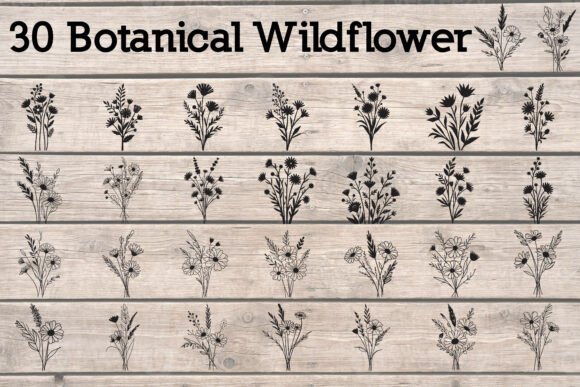
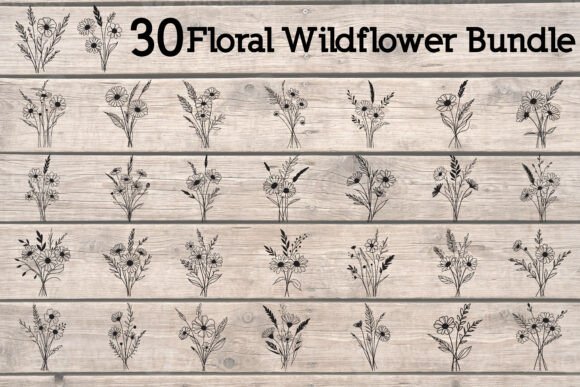
Opening the Floral Wildflower Bundle is like flipping through a quiet sketchbook—delicate, unhurried, and full of breathing room. These aren’t bold statement florals or tightly packed bouquets. They’re hand-drawn wildflowers: slender stems, asymmetrical petals, soft curves, and subtle imperfections that read as human-made, not algorithm-generated. As an embroidery designer who’s stitched hundreds of floral motifs for client apparel, boutique aprons, and personalized baby blankets, I immediately sensed their temperament: gentle, approachable, and quietly confident—not fussy, not fragile, but *considered*. That matters more than you’d think when translating line art into thread.
Real Project Test: A Linen Tote Bag for a Local Botanical Café
Last week, I used three designs from the Floral Wildflower Bundle to embroider a custom linen tote for a small-town café launching a spring tea collection. I chose a trailing vine motif (Design #17), a single loose daisy (Design #5), and a tiny clustered clover (Design #29) along the bottom hem. The result? Light, legible, and unmistakably handmade—not “machine-perfect,” but intentionally organic. Customers paused to trace the stems with their fingers. One asked if it was hand-stitched. That’s the signal: this bundle doesn’t scream; it invites. It works because the scale breathes with the fabric—not against it.
Where It Shines (and Where It Asks for Thought)
The Floral Wildflower Bundle excels in projects where subtlety builds value: embroidered pillow covers for nursery decor, minimalist sweatshirt cuffs, delicate patches for denim jackets, or tea towel hems. Its strength lies in negative space—those open areas between petals and stems translate beautifully into clean fill stitch and graceful satin stitch outlines. On medium-weight cotton, linen, or stable knits, the stitch density feels balanced: enough coverage to read clearly, but never so dense it stiffens the fabric or overwhelms the hand feel.
That said, it demands attention in certain contexts:
- Small hoop sizes: Some motifs include fine tendrils or overlapping leaves—test-fit before committing to a 3” hoop on a cap or baby onesie.
- Textured or stretchy fabrics: On terry cloth towels or lightweight jersey, stabilizer choice becomes critical. A light tear-away won’t hold; go for cut-away or hybrid for crisp petal definition.
- Dark or black fabric: These designs rely on shape and contour—not heavy contrast. If stitching on charcoal or navy, use bright ecru, pale sage, or buttercream thread to preserve delicacy without disappearing.
- Curved surfaces: Avoid placing intricate clusters (like Design #12’s multi-bloom cluster) across the crown of a baseball cap—distortion blurs fine lines. Save those for flat panels: tote fronts, apron pockets, or pillow centers.
What It Does for Your Craft Business—Beyond Pretty Stitches
For Etsy sellers and small shop owners, the Floral Wildflower Bundle isn’t just graphics—it’s brand language. When customers see these motifs on your embroidered kitchen towels or baby onesies, they register care, continuity, and quiet intention. That builds trust faster than any product description. I’ve watched buyers linger longer on listings using these designs—not because they’re flashy, but because they look *thoughtfully made*, not mass-produced.
It also supports scalability: use one bloom as a standalone monogram accent on a napkin set, layer three as a border on a quilt label, or scatter tiny sprigs across a holiday gift wrap band. Because each design stands alone yet belongs to a cohesive family, your digital embroidery file library feels curated—not cluttered. And for craft fair vendors? These motifs photograph beautifully in natural light, especially on matte, unbleached fabrics—no over-editing needed for your printable mockups.
Designer Notes You’ll Actually Use
Before stitching your first project with Floral Wildflower Bundle, do this:
- Test on scrap fabric—same weight and weave as your final piece. Watch how stems behave on knit vs. woven.
- Check thread color contrast in both daylight and indoor lighting. Pale yellows or lavenders can fade on cream linen unless you boost saturation slightly.
- Review stitch density visually, not just numerically. Zoom in on your embroidery software: are inner petals fully filled, or do they risk looking sparse?
- Confirm hoop size compatibility—especially if planning commercial embroidery runs. Not all 30 designs fit standard 4x4 hoops without repositioning.
- Inspect small details at 200% zoom: tiny stamens, leaf veins, or curling tips should be stitchable—not just pretty on screen.
- Mock it up in black and white first. If the silhouette reads clearly without color, you’ve got a strong embroidery file.
- Use proper stabilizer—lightweight cut-away for knits, tear-away for stable wovens, and optional topping for fuzzy fabrics like terry.
- Verify licensing before selling finished products or bundling the digital embroidery file in kits. Since this is a Graphics product in the Crafts category, confirm whether commercial use is included—or requires attribution or a separate license.
Final Thought: Not Just Flowers—A Quiet Design Confidence
The Floral Wildflower Bundle doesn’t try to be everything. It doesn’t shout. It doesn’t overload. What it does—and does well—is offer 30 distinct, harmonious starting points for real embroidery projects: personalized gifts that feel intimate, small shop merchandise that feels intentional, and handmade products that earn repeat customers because they look *designed*, not downloaded. Whether you’re stitching a baby’s first embroidered blanket or building a cohesive line of botanical-themed apparel for your Etsy shop, this bundle gives you room to breathe, space to refine, and motifs that hold up—not just in the hoop, but in the hand, on the shelf, and in the customer’s memory.