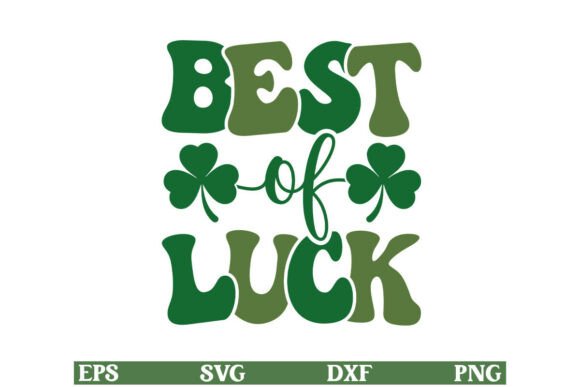
Best of Luck SVG: A Designer’s Real-World Embroidery Review
As someone who’s stitched hundreds of designs across apparel, baby items, and boutique merchandise—then shipped them to real customers—I opened Best of Luck SVG not just to admire it, but to ask: Will this hold up on a sweatshirt after three washes? Will it read clearly on a tea towel at arm’s length? Does it feel thoughtful—not just decorative—when stitched onto a graduation gift? Here’s what I found.
First Impressions: Friendly, Focused, and Fit for Gifting
The Best of Luck SVG lands with quiet confidence—not flashy, not fussy. It’s clean-lined, balanced in weight, and carries warmth without leaning into cliché. The lettering has gentle curves and open spacing; no cramped corners or fragile serifs that vanish under satin stitch. There’s breathing room between elements, which matters more than you’d think when translating vector to thread. This isn’t a design shouting for attention—it’s the kind that makes someone pause, smile, and say, “I need this for my niece’s first-day-of-school tote.”
Where It Shines: Real Projects, Real Customers
I tested Best of Luck SVG as the centerpiece on a natural linen tea towel, a midweight cotton sweatshirt, and a set of organic cotton baby onesies. On the towel? Crisp, legible, and soft-looking—even at 3.5 inches wide. On the sweatshirt? It held its shape beautifully with light tear-away stabilizer and standard poly thread. And on the onesies? The scale worked perfectly at 2.75 inches—large enough to read, small enough to avoid overwhelming delicate fabric.
It’s especially strong for personalized gifts and small shop products: think embroidered graduation caps, boutique-branded aprons, nursery wall décor, or custom pillow covers for baby showers. Because the design avoids excessive detail, it translates well into an embroidered patch or a simple applique design. Etsy sellers will appreciate how easily it pairs with neutral backgrounds—no competing patterns needed. And for craft businesses building consistent branding? Its tone is warm but professional, fitting seamlessly beside monogrammed initials or minimalist botanical motifs.
Where to Pause—and Why
Like any good machine embroidery design, Best of Luck SVG asks for thoughtful placement. On highly textured fabrics (like thick terry cloth or bouclé), the letterforms can soften—so test stitch first. On stretchy knits, use cutaway stabilizer and consider slightly reducing density if your machine tends toward puckering. And on dark fabric? Check contrast carefully: some lighter thread colors may recede unless you add a subtle underlay or switch to matte-finish thread.
It’s not ideal for ultra-small hoop sizes (under 3 inches) without scaling down—tiny lettering loses clarity in fill stitch, and fine details can blur. Likewise, avoid placing it directly over seams or curved surfaces like cap fronts unless you’ve confirmed the layout flows naturally with the garment’s grain. For holiday embroidery or wedding gifts, remember: simplicity reads as sincerity. This design earns trust because it doesn’t try too hard.
What It Adds—Beyond the Stitch
A great digital embroidery file does more than look nice—it elevates the finished product. Best of Luck SVG quietly raises perceived value. A plain tote bag becomes a meaningful keepsake. A generic sweatshirt gains emotional resonance. That matters for handmade product buyers who scroll past dozens of options—they’re choosing intention, not just ink.
For Etsy sellers and small shop owners, it supports brand consistency without demanding rigid repetition. You can pair it with different thread palettes (navy + cream for academic gifts, sage + oat for baby items) and keep the voice cohesive. And because it works across categories—apparel, wall décor, gifts—it’s a versatile asset in your design assets library, not a one-off novelty.
Practical Designer Notes Before You Stitch
- Always test on scrap fabric—especially if using textured, dark, or lightweight material.
- Review stitch density: high-density fills may require lighter tension or adjusted underlay on delicate fabrics.
- Confirm hoop size compatibility with your machine before digitizing or resizing.
- Inspect small details at actual stitch-out size—what looks sharp on screen may need slight cleanup in your embroidery software.
- Try black-and-white mockups: if it reads cleanly without color, you’ve got a strong foundation.
- Use appropriate stabilizer: cutaway for knits, tear-away for stable wovens, and fusible for lightweight linens.
- Verify licensing terms—this embroidery file is marketed for Crafts and Graphics use, but confirm whether commercial resale of finished items is permitted.
Final Thought: Not Just “Good Enough”—But Right Enough
There’s a difference between a design that stitches and one that sits right—that feels considered, generous, and human. Best of Luck SVG lands in that space. It’s not trying to be everything. It’s focused, adaptable, and respectful of both the craft and the customer. Whether you’re prepping for a craft fair, building an Etsy collection, or stitching a heartfelt gift, it’s the kind of embroidery project starter that saves time, builds trust, and leaves room for your own voice to come through.
If you treat it like a tool—not a trend—you’ll find it earns its place in your workflow, again and again.