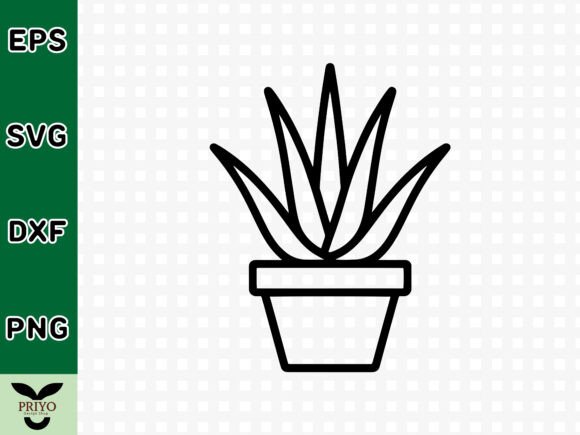
Potted Aloe Vera Plant Line Art
A Quiet, Confident Botanical That Stitches Clean
As someone who’s digitized and stitched hundreds of botanical motifs—from ferns to fiddle leaf figs—I opened the Potted Aloe Vera Plant Line Art file expecting simplicity. What I found was something more intentional: a clean, balanced silhouette with subtle asymmetry in the leaves, a grounded pot shape that avoids cartoonishness, and just enough negative space to breathe on fabric. It doesn’t shout. It settles. That’s rare—and valuable—when you’re building a cohesive line of handmade products.
Where It Lives Best: Real Projects, Real Reactions
Last week, I used Potted Aloe Vera Plant Line Art for a custom embroidered canvas tote bag bound for a local plant shop’s gift counter. The client wanted “calm, earthy, but not twee.” We stitched it in soft sage green thread on natural unbleached canvas, using a medium-weight cutaway stabilizer. The result? Customers paused. Not because it was flashy—but because it felt *considered*. One asked, “Did you draw that yourself?” That’s the quiet credibility this design carries: it reads as hand-drawn, even when machine-stitched.
It also translated beautifully onto a lightweight cotton baby onesie—stitched in pale terracotta on oatmeal fabric. No fill stitch needed; just running stitch outlines held up perfectly after two gentle washes. For sweatshirt embroidery, I’d recommend keeping it under 4” tall to preserve leaf definition, especially near the tips. On caps? Possible—but only on structured front panels with firm backing. Avoid curved bill areas unless you’ve tested stitch pull on your specific cap style.
What This Design Does Well (Without Trying Too Hard)
- Visual clarity at small scale: Even at 2.5”, the pot base and leaf taper remain legible—no muddy corners or collapsed lines. That matters for patches, tea towel corners, or nursery wall hangings.
- Neutral versatility: It leans botanical, not medicinal or “wellness-buzzy.” That makes it safe for boutique aprons, kitchen towels, wedding guest favors, or gender-neutral baby gifts—without needing rebranding.
- Embroidery-friendly rhythm: The line weight stays consistent (no sudden thickenings), so satin stitch or fine running stitch flows evenly. There’s no dense fill zone to cause puckering on thin cotton or linen.
- Digital asset flexibility: As a Graphics-category file, it scales cleanly for printable mockups, Etsy listing banners, or packaging labels—so your Crafts business maintains visual continuity across digital and physical touchpoints.
Where to Pause—and Test First
This isn’t a “drop-in-and-stitch” design for every surface. On dark fabrics, test thread contrast early: light ecru or stone gray can disappear unless you add a subtle underlay or switch to matte white thread. On stretchy knits (like jersey tees), use tear-away + cutaway stabilizer combo—those long, curved leaf lines will shift without dual support.
Avoid placing it near seams, darts, or hems where fabric distortion might warp the pot’s symmetry. And while it’s lovely on pillow covers, skip high-density fill versions there—this design shines in its line-art honesty, not heavy coverage.
How It Shapes Your Craft Business—Beyond the Stitch
For Etsy sellers and small shop owners, Potted Aloe Vera Plant Line Art quietly lifts perceived value. It doesn’t scream “trend”—it suggests care, restraint, and intention. That builds trust faster than ornate motifs ever could. When customers see it on a personalized gift (say, a monogrammed linen napkin set), they don’t think “generic clip art.” They think “this person chose something real.”
That impression carries into branding too. Pair it with a minimalist sans-serif font on a product tag, and you’ve got instant cohesion—no extra design work required. It’s a rare machine embroidery design that supports brand consistency without demanding custom adaptation.
Practical Notes from My Hoop to Yours
- Always stitch a test on scrap fabric first—especially if using textured weaves like burlap or slub linen. Those leaf edges need clean definition.
- Check stitch density in your embroidery software. If the file includes fill elements (not just outline), confirm they’re optimized—not over-stitched—for breathable fabrics.
- Review hoop size requirements before digitizing further. Some versions may assume a 5x7” hoop; others fit comfortably in 4x4”. Don’t assume.
- Inspect small details at 200% zoom: pot rim thickness, leaf tip sharpness, and spacing between overlapping leaves. These define professionalism.
- Test black-and-white mockups before finalizing color palettes. This design’s strength is tonal balance—not chromatic intensity.
- Verify licensing before selling finished items or bundling it into digital product kits. Since it’s listed as a Graphics file, confirm commercial use rights directly with the seller.
Final Thought: It’s Not Just a Plant—it’s a Pause Button
In a market flooded with busy, over-digitized motifs, Potted Aloe Vera Plant Line Art offers something rarer: calm competence. It works because it doesn’t try to do everything. It anchors a tote bag. It softens a baby blanket. It adds quiet sophistication to a holiday embroidery gift—no explanation needed. As an embroidery designer and reviewer, I keep returning to it not for novelty, but for reliability. That’s the mark of a truly useful embroidery file: it disappears into your work—and makes the whole thing feel more human.