Open Umbrella Silhouette
A Designer’s First Glance: Simple, Suggestive, and Surprisingly Versatile
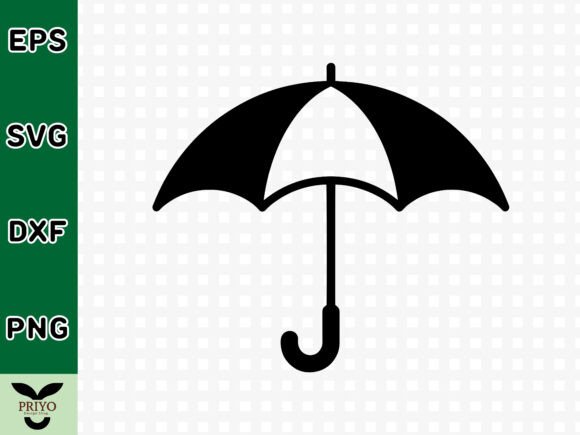
When I opened Open Umbrella Silhouette for the first time, I didn’t see just a shape—I saw context. It’s clean, uncluttered, and leans into quiet confidence: a single open umbrella, centered, with gentle curve and balanced negative space. There’s no rain, no person, no text—just the silhouette. That restraint is its strength. As a designer who regularly selects embroidery files for client projects and small-batch handmade goods, I immediately pictured it on a linen tea towel for a boutique kitchen line, or stitched in soft grey thread onto an oatmeal-colored baby blanket. It doesn’t shout; it invites. And that makes it unusually adaptable across Crafts and Graphics use cases—from digital mockups to physical embroidered patch applications.
Real-World Test: Stitching It Onto a Linen Tote Bag
Last week, I prepped a custom order for a local florist: five medium-weight natural linen tote bags, each featuring one central design for their spring collection. I chose Open Umbrella Silhouette as the anchor motif—not for literal weather themes, but for its subtle suggestion of shelter, care, and calm. In practice, it stitched cleanly at 3.8" wide using standard cutaway stabilizer and 40-weight rayon thread. The curves held well, corners stayed crisp, and the open arc created enough breathing room to avoid dense fill stitch buildup. Customers responded warmly—not because it was flashy, but because it felt intentional, thoughtful, and quietly elegant next to hand-lettered botanical tags.
Where It Shines (and Where It Needs Thought)
- Custom apparel: Works beautifully on sweatshirt embroidery and relaxed-fit t-shirts—especially when paired with minimalist branding. Avoid placing it directly over seams or high-stretch zones without extra stabilization.
- Baby embroidery & nursery decor: Its gentle form reads as soothing, not cutesy. Ideal for crib sheets, onesies, or wall hangings—just confirm thread colors are Oeko-Tex certified if intended for infants.
- Tote bag design & aprons: Holds up well on textured fabrics like canvas or heavy cotton duck. The silhouette’s open center helps prevent puckering common with dense fill stitch areas.
- Holiday embroidery & personalized gift: Surprisingly effective for autumn or rainy-season gifting—think “cozy umbrella” rather than storm imagery. Great for wedding favors (e.g., embroidered sachets) when styled with muted thread palettes.
- Etsy seller & small shop product: Stands out in digital embroidery file listings because it avoids trend fatigue. Buyers recognize it as timeless—not tied to a passing aesthetic.
Watch These Details Before You Stitch
Not every surface welcomes Open Umbrella Silhouette equally. Here’s what I check before committing to a project:
- Hoop size & placement: It’s a mid-scale design—comfortable in 4x4 hoops, but tight in anything smaller. If you’re planning cap embroidery or curved surfaces, verify whether your digitizing allows for slight contour adjustment.
- Fabric texture & stability: On thin fabric like voile or lightweight rayon, add tear-away + cutaway combo stabilizer. On dark fabric, test thread contrast—matte black thread can disappear; charcoal or deep navy often reads clearer.
- Stitch density & wash durability: While not overly dense, the curved canopy area carries more fill stitches than the stem. For frequently washed items (kitchen towels, baby clothes), run a quick wash-and-dry test on scrap fabric first.
- Commercial embroidery & licensing: Since this is listed as a Graphics product, confirm whether the license permits resale of finished embroidered products—or if it’s limited to personal use. Many craft business owners overlook this until Etsy flags a listing.
How It Shapes Perception—Beyond the Stitch
Embroidery isn’t just about thread and fabric—it’s about how a buyer feels holding something handmade. Open Umbrella Silhouette supports that feeling. Its simplicity signals craftsmanship, not haste. When used thoughtfully—say, on a cream apron for a baker’s pop-up stall—it adds quiet sophistication without competing with function. Customers notice the balance: enough detail to feel considered, enough space to feel restful. That builds trust. It also scales gracefully: works as a standalone motif on a pillow cover, or as part of a coordinated set (e.g., matching tea towel + oven mitt + recipe card holder). For Etsy sellers, that cohesion strengthens brand consistency across listings—and improves conversion in visual-heavy feeds.
Practical Designer Notes You’ll Actually Use
- Always test Open Umbrella Silhouette on scrap fabric matching your final project’s weight and weave—even if you’ve stitched it before. Linen behaves differently than cotton twill, and thread tension shifts subtly.
- Review the design in black-and-white mockups. Does the silhouette retain clarity? If edges blur or details vanish, adjust underlay or reduce stitch count where possible.
- Compare light and dark fabric backgrounds side-by-side. A warm taupe thread might glow on ivory but recede on charcoal—don’t assume.
- Use proper stabilizer for your fabric type. Skipping it on textured or loosely woven materials risks distortion in the curved canopy.
- If offering this as part of a digital embroidery file bundle, clarify usage rights upfront—especially for commercial embroidery or printable mockup integration.
Final Thought: Less Is Anchored, Not Empty
In a market flooded with busy motifs and over-digitized graphics, Open Umbrella Silhouette stands out by doing less—while delivering more intention. It doesn’t need embellishment. It doesn’t demand attention. It simply belongs: on a handmade product meant to be held, gifted, lived with. Whether you’re stitching for a client, building a craft business, or preparing holiday embroidery for loved ones, this design earns its place not through novelty, but through quiet reliability. Just remember—its elegance depends on your choices: the right stabilizer, the right thread, the right fabric, and the right moment to let simplicity speak.