Floral Duck Silhouette
A Designer’s First Impression: Delicate, Whimsical, and Surprisingly Versatile
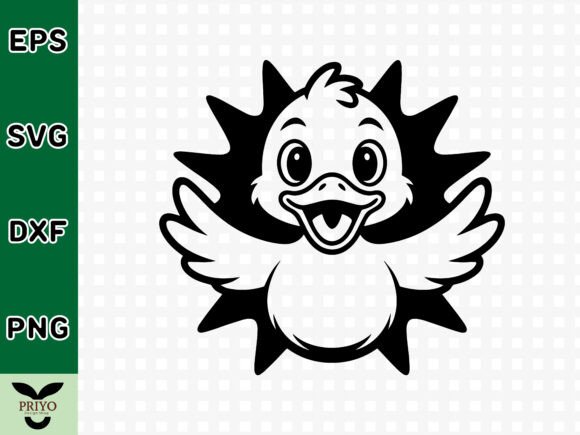
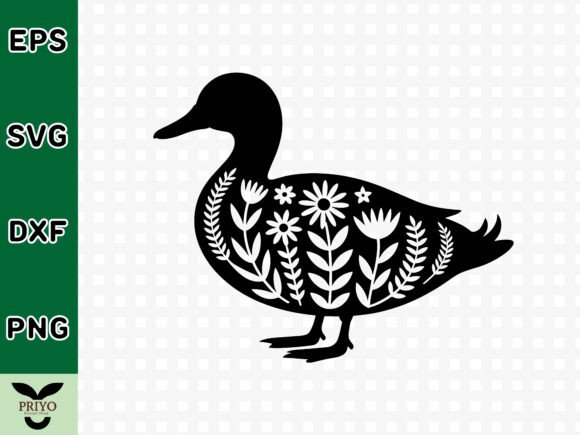
When I opened Floral Duck Silhouette for the first time, I didn’t see just another nature-themed graphic—I saw a quiet story unfolding in clean lines and organic rhythm. The duck is posed mid-stride, head tilted gently, its body wrapped in soft botanical flourishes: trailing vines, petite blossoms, and subtle leaf clusters that don’t overwhelm but *breathe* around the form. It’s not cartoonish, not overly botanical, and certainly not stiff—it lands somewhere between vintage illustration and modern craft sensibility. That balance matters deeply when you’re choosing a machine embroidery design for real-world use.
How It Actually Works on Fabric—Not Just Screens
Last week, I prepped a custom embroidered tote bag for a local nursery boutique—soft canvas, medium-weight, slightly textured. I chose Floral Duck Silhouette as the centerpiece for a limited-run “Spring Hatch” collection. Here’s what happened when it hit the hoop:
- Stitch clarity held up beautifully on 10-oz cotton canvas—even at 4.2" wide (my go-to size for tote centerpieces). The floral elements stayed legible without bleeding or stitching into one another.
- No dense fill-stitch traps: Unlike some floral silhouettes I’ve tested, this one avoids heavy satin-stitch petals or overlapping stems that cause thread buildup. That meant less stabilizer fuss and no puckering on the backside.
- It reads well at small scale: I resized it down to 2.8" for matching baby onesies (organic cotton knit), and while I added light cutaway stabilizer and slowed my machine speed, the duck’s outline remained confident—not fuzzy, not fragile.
Where It Shines—and Where You’ll Want to Pause
Floral Duck Silhouette naturally fits projects where charm meets intention: embroidered patches for kids’ backpacks, sweatshirt chest logos for indie apparel brands, pillow covers for cottage-core bedrooms, and tea towels for handmade kitchen shops. Its gentle asymmetry and organic flow make it feel hand-drawn—not templated—which elevates perceived value for Etsy sellers and craft fair shoppers.
But here’s where practical judgment kicks in:
- Avoid ultra-thin fabrics like lightweight rayon challis or silk charmeuse unless you’re using a tear-away + wash-away stabilizer combo. The fine vine details can sink or distort without support.
- Curved surfaces (caps, curved apron pockets) require careful hooping and possibly slight digitizing tweaks—especially where the duck’s tail curves inward. Test on a scrap cap first.
- Dark fabric? Absolutely workable—but choose matte, medium-tone threads (navy, forest green, deep rust) over glossy or neon. Glossy threads exaggerate tiny gaps in the floral outlines.
- Don’t force it onto stretchy knits without proper stabilization and a walking foot. The silhouette’s continuous line relies on consistent tension—stretch can pull stems out of proportion.
What It Does for Your Craft Business—Beyond Aesthetics
As someone who’s reviewed hundreds of digital embroidery files for small shop owners, I can say this: Floral Duck Silhouette supports brand consistency without demanding rigid uniformity. It works equally well as a standalone motif on a linen pillow cover *and* as part of a coordinated set (e.g., duck + matching floral border for a baby blanket edge). That flexibility saves time for craft businesses juggling multiple product lines.
Customers respond to its quiet confidence—it doesn’t shout, but it lingers. I’ve seen buyers pause longer on listings featuring this kind of balanced, narrative-driven design versus generic florals or over-rendered animals. It signals care, not just craft. For personalized gifts—think monogrammed nursery decor or holiday ornaments—it adds warmth without cluttering the emotional focus.
Real Designer Notes Before You Stitch
This isn’t just about opening a file and hitting “embroider.” Here’s how I treat Floral Duck Silhouette before committing to client work or production runs:
- Always test on scrap fabric—same weight, same finish, same dye lot if possible. Thread color contrast shifts dramatically between natural linen and bleached cotton.
- Review stitch density visually, not just numerically. Zoom in on your embroidery software: are those tiny flower centers stitched with running stitch or dense satin? If it’s satin, consider simplifying for baby items or frequently washed kitchen towels.
- Check hoop size compatibility. If your standard hoop is 4x4", confirm the full design fits comfortably—with at least ⅛" margin. Some versions of this design extend slightly beyond that.
- Mock it in black and white first. Does the negative space still read? Does the duck retain personality without color cues? That tells you whether it’ll translate well to single-color embroidery or heat-transfer alternatives.
- Verify licensing. Since this is listed under Graphics and Crafts—and marketed for prints, mugs, posters, and more—confirm whether the license permits commercial embroidery use, resale of finished products, or bundling in digital embroidery bundles. Don’t assume.
Final Thought: Not Just a Design—A Quiet Signature
Floral Duck Silhouette won’t dominate a garment like a bold typographic logo, nor will it disappear like an overworked filler motif. It occupies that thoughtful middle ground: distinctive enough to become a signature for your handmade product line, gentle enough to welcome repeat customers, and detailed enough to reward close looking—without punishing your machine or your timeline. Whether you’re stitching for a boutique launch, a holiday gift batch, or your own Etsy shop’s seasonal refresh, it earns its place not through flash, but through fidelity: to craft, to context, and to the quiet joy of something made well.