Don’t Rush Me—I’m Waiting for the Last
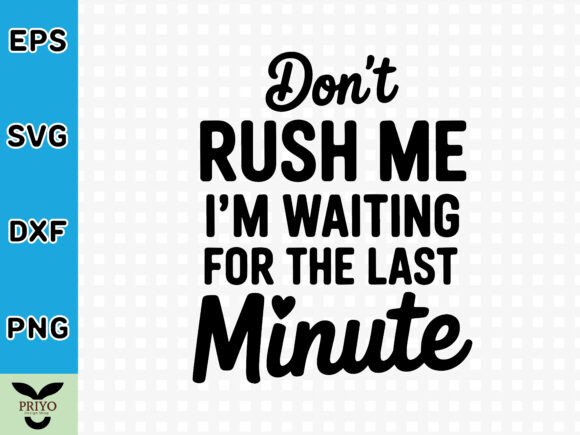
As a designer who’s stitched hundreds of custom pieces—from boutique aprons to Etsy baby onesies—I opened Don’t Rush Me I’m Waiting for the Last expecting wit, not whimsy. What landed in my inbox wasn’t just another SVG; it was a quiet, confident pause in a world that scrolls too fast. That tone carries through every curve and kerning choice—and it matters more than you’d think when translating pixels to thread.
A Design That Breathes—Not Just Decorates
The first thing I noticed? Its rhythm. The phrase isn’t crammed. Letters have breathing room. The “Last” hangs with gentle weight—not oversized, not timid—just right for a satin-stitched finish on a medium-weight cotton tote. I visualized it instantly: centered on a natural linen tea towel, embroidered in soft charcoal gray thread. No filler motifs, no clipart clutter—just clean typography with subtle personality. That restraint makes Don’t Rush Me I’m Waiting for the Last unusually versatile for a Crafts category graphic. It leans into calm rather than chaos, which is rare in machine embroidery design libraries packed with overdesigned quotes.
Real-World Stitching: Where It Shines (and Where It Asks for Care)
Last week, I prepped a small-batch order of unisex sweatshirts for a local bookstore pop-up. Their theme? “Slow reading, deep thinking.” Don’t Rush Me I’m Waiting for the Last felt like the perfect embroidery file—minimal, memorable, and emotionally resonant. On 100% cotton French terry, it stitched cleanly at 4.5" wide using medium tear-away stabilizer. The letterforms held crisp edges, even through the fabric’s slight nap. No skipped stitches, no thread nesting—just quiet professionalism.
But—and this is where experience kicks in—it’s not a one-size-fits-all embroidery project. On thin rayon-blend baby onesies? I’d scale down to 3.25" max and add lightweight cut-away stabilizer underneath. Why? Because the lowercase “a” and “e” have tight counters; on stretchy or slippery fabric, those details can blur without support. Same goes for curved surfaces: caps or beanies would require careful digitizing adjustments (or a re-digitized version)—this SVG isn’t optimized for 3D curvature out of the box.
Dark fabrics demand attention too. That elegant spacing works beautifully on cream or oatmeal, but on navy or charcoal, I tested three thread colors before settling on off-white—not stark white—to preserve warmth and readability. And yes, I ran a black-and-white printable mockup first. Always do. What reads as charmingly relaxed on screen can feel distant or vague when stitched small on a busy background.
Fabric Texture & Stitch Density: The Unseen Variables
This design relies on clarity—not density. There’s no heavy fill stitch blocking or dense applique layers. That’s a strength for breathable apparel (think embroidered pillow covers or lightweight summer scarves), but it also means thread color contrast becomes your co-designer. On textured fabrics like waffle-weave kitchen towels, I recommend slightly heavier top thread (60wt instead of 80wt) to ensure legibility. And if you’re planning commercial embroidery for resale—say, branded tote bags for a wellness studio—verify the license permits finished product sales. The listing says “ideal for prints, t-shirt designs, mug making, posters,” but doesn’t specify commercial embroidery rights. When in doubt, ask the seller.
Where It Fits Best—And Why Customers Notice
- Personalized gifts: Embroidered on a linen pillow cover for a friend’s birthday? Yes. The sentiment feels handmade, not mass-produced—even though it’s a digital embroidery file.
- Boutique merchandise: Paired with minimalist packaging and a handwritten note, Don’t Rush Me I’m Waiting for the Last elevates a $28 apron from craft fair staple to curated lifestyle item.
- Holiday or wedding embroidery: Not flashy—but imagine it stitched subtly on the hem of a linen napkin set for a “slow celebration” wedding. It adds narrative without shouting.
- Etsy seller assets: Use it in your shop banner, paired with a neutral photo of stitched samples. It signals intentionality—exactly what buyers scanning for “handmade with care” are seeking.
What This Design Says About Your Brand—Without Saying a Word
Choosing Don’t Rush Me I’m Waiting for the Last isn’t just about aesthetics. It quietly communicates values: patience, presence, craftsmanship over speed. For craft business owners, that alignment matters. A customer who buys a hand-embroidered sweatshirt with this phrase isn’t just buying apparel—they’re buying into a mindset. That builds trust faster than any “handmade with love” tagline.
That said, don’t force it. It won’t land on a neon-pink toddler onesie with cartoon dinosaurs. It belongs on products where space, silence, and sincerity are part of the design language—tea towels folded neatly in a ceramic bowl, a linen market bag hanging by the door, a baby blanket laid gently across a rocking chair.
Practical Designer Notes Before You Stitch
- Test on scrap fabric *first*—especially if using textured, dark, or stretchy materials.
- Check thread color contrast on both light and dark backgrounds before final hooping.
- Review stitch density: this design stays light, but confirm no overlapping runs in tight curves.
- Confirm hoop size compatibility—some versions may assume 5x7”, others smaller.
- Inspect small details (like the dot over the “i”) at actual stitch size—what looks fine at 200% zoom may vanish when stitched.
- Use proper stabilizer: medium tear-away for stable weaves, cut-away for knits or delicate fabrics.
- If selling finished products, verify licensing—this Graphics file may be intended for personal use unless otherwise stated.
In the end, Don’t Rush Me I’m Waiting for the Last earns its place not because it’s trendy, but because it’s thoughtful. It respects the viewer’s time, the maker’s skill, and the quiet power of well-placed words. Whether you’re an Etsy seller building a cohesive brand, a small shop owner curating meaningful merchandise, or a hobbyist stitching gifts that linger in memory—it’s a design that waits patiently for the right moment to be stitched. And sometimes, that’s exactly what makes it unforgettable.